


Here's Every Property Document You Need to Keep (And Why It Actually Matters)
Updated: 4 days ago

Buying your first property is exciting, new keys, new paint smell, maybe a new IKEA trip or two. But somewhere in between the excitement, you get handed a thick stack of documents, and honestly, most people just shove it in a drawer and forget about it until something goes wrong.
The problem is, by the time something does go wrong, you're trying to sell, refinance, make an insurance claim, or sort out something with the Land Office. That's exactly when you realise you don't actually know what you're supposed to have kept, or worse, you can't find it.
So let's go through it properly. Here's what you should be holding onto, and why each one actually matters.
Property documents aren't just formalities, they are proof. Proof of ownership, proof of what you paid, proof of what's included, proof that things were done properly. Without them, even simple things like selling the house, claiming insurance after a leak, proving you own the parking spot downstairs suddenly becomes a lot harder, slower, and sometimes more expensive than they needed to be.
Think of it less as "paperwork to store" and more as "evidence you'll eventually need."
The Original Land Title (and Everything Attached to It)

This is the big one. Your title (often called a "geran") is your legal proof of ownership, and it's needed for almost any future transaction involving the property like selling it, transferring it, or using it as loan collateral.
Here's something people often miss: many titles come with a building plan attached at the back. It's issued as one set so don't separate them. If the building plan goes missing even though the title itself is fine, that's still a problem you'll eventually have to deal with.
Keep it somewhere secure like a fireproof safe or a bank safety deposit box. If it's genuinely lost, there is a replacement process through the Land Office, but it's time-consuming (usually a few months), so prevention really is the easier route here.
Your Sale and Purchase Agreement (SPA)

This is the actual contract that governed your purchase. What you agreed to buy, at what price, under what conditions. You'll need this again if you ever sell the property (it establishes your acquisition cost, which matters for calculating Real Property Gains Tax), and it's often requested by banks during refinancing.
If there were any supplemental agreements (addendums, variations to the original SPA), keep those together with it as one complete set.
Loan Documents (If You Financed the Purchase)

This includes your Facility Agreement / Letter of Offer, the Charge document, and if applicable, a Deed of Assignment or Power of Attorney tied to the loan.
Even after your loan is fully settled, it's worth keeping these documents, along with your discharge of charge confirmation once you've redeemed the loan.
This proves the bank's claim on your property has been properly removed, which you'll need if you sell or refinance later.
Certificate of Fitness for Occupation (CF) / Certificate of Completion and Compliance (CCC)

This document confirms the building was certified safe and fit to be occupied when it was completed. It sounds like something only developers need to worry about, but it actually matters to you too — buyers, banks, and even insurers sometimes ask for it, particularly for older properties or during a resale.
If you've lost yours, your property's original developer or the local authority may still have a record of it, but it's much easier to just keep a copy on hand.
Quit Rent, Assessment, and Utility Receipts

Quit rent (cukai tanah) and assessment (cukai pintu) are ongoing payments to the state and local authority respectively. Keeping your latest paid receipts matters for a few reasons: it proves you're not in arrears (which could otherwise delay a sale), and it's commonly requested during property transactions as part of the standard document checklist.
The same goes for your sewerage (Indah Water), water, and electricity bills. Especially the final readings and receipts around the time of any ownership change, since these often need to be formally transferred into the new owner's name.
Tenancy Agreement (If the Property Is Rented Out)
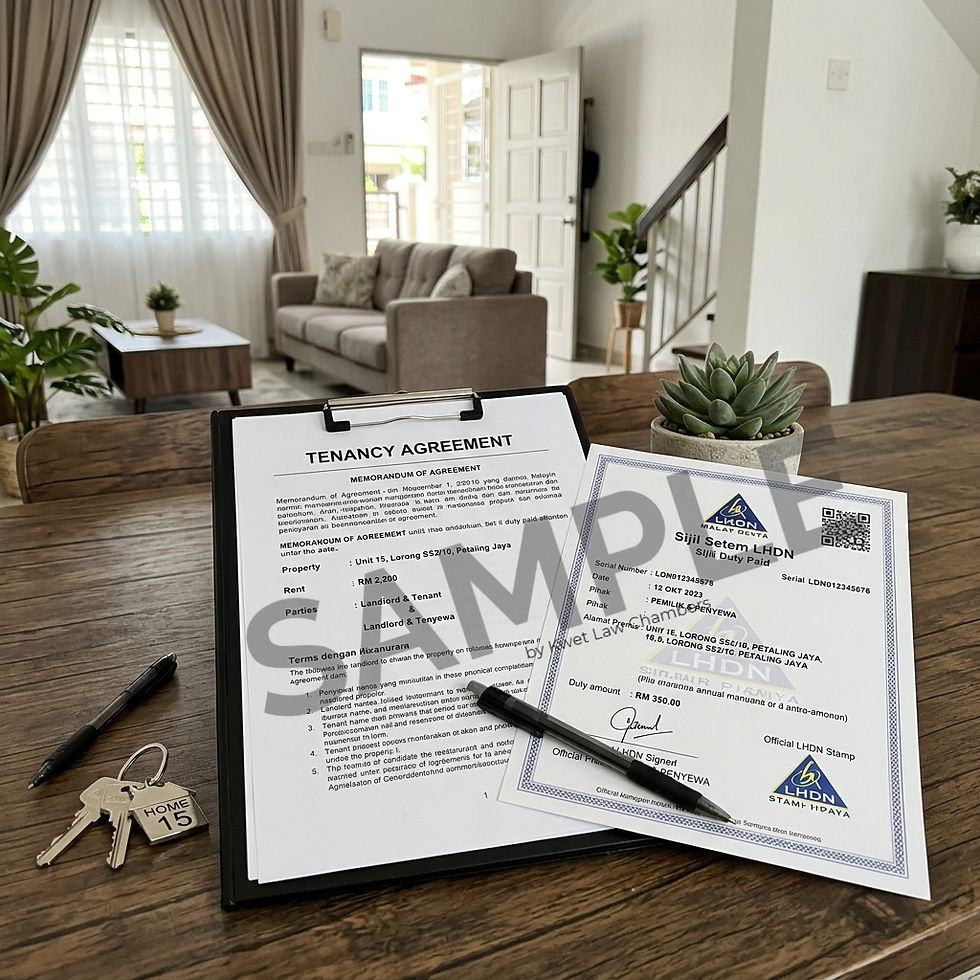
If you're renting out your property, keep the signed Tenancy Agreement, along with proof that it's been properly stamped at LHDN. An unstamped tenancy agreement generally isn't admissible as evidence in court if a dispute with your tenant ever arises, whether that's over unpaid rent, early termination, or damage to the property. This means that without a stamped agreement, you could find yourself with far less legal standing to enforce the terms you both agreed to, right when you need it most.
It's also worth keeping a record of the stamp certificate (or receipt) separately, since this is the actual proof of stamping. The agreement itself won't always show it clearly at a glance. If you're managing multiple rental units, it may help to keep a simple log noting which agreements have been stamped, and when each one is due for renewal, so nothing slips through the cracks.
So this one's genuinely worth double-checking properly, rather than just filing it away and assuming it's been taken care of.
Strata Documents (For Apartments, Condos, and Gated Communities)

If you own a strata property, keep your strata title (once issued), the Deed of Mutual Covenant (which outlines the rules and obligations between unit owners), and your JMB or MC maintenance fee receipts. These come up often during a sale, a dispute over common property, or simply to confirm your maintenance fees are up to date.
If your strata title hasn't been issued yet, make sure your purchase agreement documents are scanned and kept ready, as they'll be essential for completing your transfer once the title is eventually issued.
Renovation and Receipts for Property-Related Expenses

If you've renovated, upgraded, or spent money improving the property over the years, keep those receipts too. When you eventually sell the property, RPGT is calculated based on your gain, the difference between what you sold it for and what it effectively cost you, including the cost of improvements made to it over the years. If you've genuinely spent money upgrading the property, documented improvement costs can be deducted from that gain, which directly reduces the amount of RPGT you'd owe. Without receipts or proper documentation (invoices, contractor billings, even bank transfer records showing payment), you simply lose the ability to claim these costs, no matter how real or substantial the renovation actually was.
None of this is complicated once you know what to look for. The hard part is usually just not knowing what matters until you actually need it. Keeping your property documents organised from day one saves you time, money, and a fair amount of stress down the line, whether that's five months or fifteen years from now.
Not sure what documents you have, or need help organising your property's paperwork? Our team at Kwet Law Chambers is happy to help you figure out what you have, what you're missing, and what to do next, contact us today for a chat.


Comments